
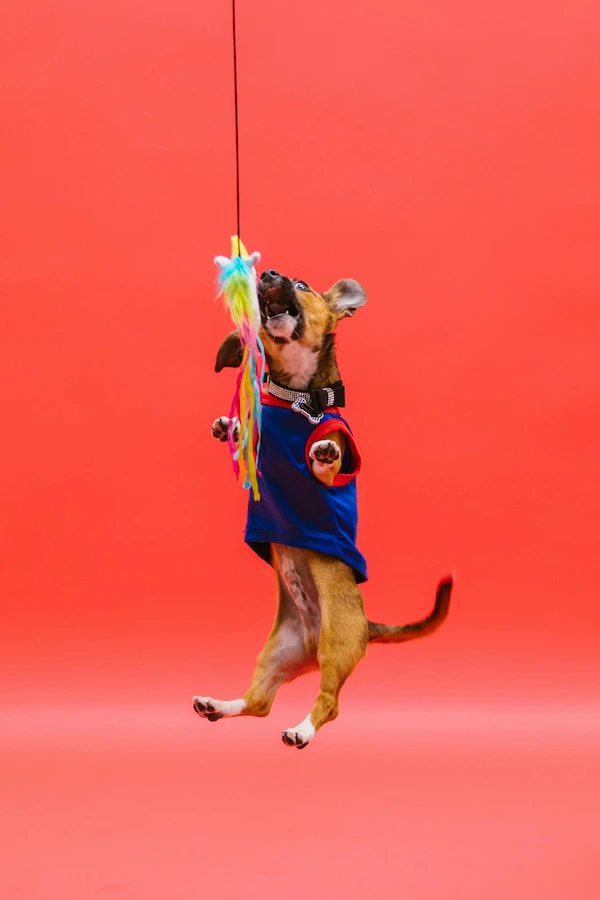
Games to Tire Your Dog Without Leaving Home: Complete Guide for Indoor Exercise
Learn how to keep your dog active, happy, and balanced indoors through effective games that stimulate body and mind.
It is not always possible to go outside for your dog to exercise. However, there are many games and activities that allow your dog to expend physical and mental energy indoors, preventing behavioral problems, anxiety, and boredom. A well-stimulated dog at home is a happy, balanced, and healthy dog.
Why it is important to tire your dog indoors
Physical and mental exercise is essential for your dog’s well-being. When they cannot go outside, they may develop destructive behaviors, anxiety, excessive barking, or hyperactivity. Proper indoor games allow:
- Release of accumulated energy and prevention of boredom.
- Mental stimulation through challenges and problem-solving.
- Reinforcement of obedience and learning new skills.
- Strengthening the bond with the owner through positive interaction.
Maintaining a routine of indoor games contributes to a balanced, relaxed, and happy dog, even without outdoor walks.
- Release of accumulated energy and prevention of boredom.
- Mental stimulation through challenges and problem-solving.
- Reinforcement of obedience and learning new skills.
- Strengthening the bond with the owner through positive interaction.
Maintaining a routine of indoor games contributes to a balanced, relaxed, and happy dog, even without outdoor walks.
Scent and search games
A dog’s sense of smell is its most developed sense, and using it for indoor games is highly effective for mental fatigue. Examples include:
- Hiding treats or kibble in various places for the dog to find.
- Using snuffle mats or interactive toys that require searching and problem-solving.
- Teaching commands like "find it" while exploring the house.
These games stimulate focus, reduce stress, and provide satisfaction as the dog completes challenges and receives rewards.
- Hiding treats or kibble in various places for the dog to find.
- Using snuffle mats or interactive toys that require searching and problem-solving.
- Teaching commands like "find it" while exploring the house.
These games stimulate focus, reduce stress, and provide satisfaction as the dog completes challenges and receives rewards.
Chase and running games
Even with limited space, movement games are possible:
- Throwing small balls down hallways or safe rooms.
- Tug-of-war with durable toys.
- Training recall commands such as "come here" or "heel".
- Improvised obstacle courses using furniture and cushions.
These exercises combine physical activity with training, improving coordination, strength, and endurance without leaving the house.
- Throwing small balls down hallways or safe rooms.
- Tug-of-war with durable toys.
- Training recall commands such as "come here" or "heel".
- Improvised obstacle courses using furniture and cushions.
These exercises combine physical activity with training, improving coordination, strength, and endurance without leaving the house.
Hide-and-seek and interactive games
Hide-and-seek games are ideal to stimulate mind and body:
- Hide yourself or the dog’s favorite objects and encourage them to find them.
- Alternate hiding spots and reward with treats or petting.
- Introduce variations, like hiding multiple toys at once, to increase difficulty.
This game reinforces obedience, develops memory, enhances concentration, and provides fun in limited spaces.
- Hide yourself or the dog’s favorite objects and encourage them to find them.
- Alternate hiding spots and reward with treats or petting.
- Introduce variations, like hiding multiple toys at once, to increase difficulty.
This game reinforces obedience, develops memory, enhances concentration, and provides fun in limited spaces.
Interactive and puzzle toys
Interactive toys allow dogs to work mentally for a reward:
- Puzzle feeders that require manipulating mechanisms to get food.
- Treat-dispensing toys that require creativity and dexterity.
- Balance or coordination games using balls or blocks.
- Obedience-integrated toys for daily training routines.
These activities provide deep mental fatigue, prevent undesired behaviors, and keep the dog entertained for extended periods.
- Puzzle feeders that require manipulating mechanisms to get food.
- Treat-dispensing toys that require creativity and dexterity.
- Balance or coordination games using balls or blocks.
- Obedience-integrated toys for daily training routines.
These activities provide deep mental fatigue, prevent undesired behaviors, and keep the dog entertained for extended periods.
Obedience training as a game
Turning obedience into a game is an efficient way to expend energy:
- Practice basic commands ("sit," "stay," "come") with treats and reinforcement.
- Introduce combinations of commands to increase difficulty and focus.
- Use short but frequent sessions to maintain motivation and attention.
- Alternate free play with structured exercises to balance fun and discipline.
This approach not only tires the dog but also strengthens cognitive skills and owner-dog communication.
- Practice basic commands ("sit," "stay," "come") with treats and reinforcement.
- Introduce combinations of commands to increase difficulty and focus.
- Use short but frequent sessions to maintain motivation and attention.
- Alternate free play with structured exercises to balance fun and discipline.
This approach not only tires the dog but also strengthens cognitive skills and owner-dog communication.
Indoor agility games
Even in limited space, agility courses can be improvised:
- Create tunnels with sheets or large boxes.
- Low jumps over cushions or small platforms.
- Slalom between furniture or improvised cones.
- Change routes and difficulty levels to keep interest high.
Agility games stimulate coordination, physical endurance, and learning capacity, offering complete exercise without going outdoors.
- Create tunnels with sheets or large boxes.
- Low jumps over cushions or small platforms.
- Slalom between furniture or improvised cones.
- Change routes and difficulty levels to keep interest high.
Agility games stimulate coordination, physical endurance, and learning capacity, offering complete exercise without going outdoors.
Sessions adapted for safety and well-being
It is important to adapt games to the dog’s size, age, breed, and energy level:
- Avoid toys that can break or be swallowed.
- Supervise to prevent collisions or injuries during running or jumping.
- Control duration and intensity, especially for puppies and senior dogs.
- Ensure water availability and regular breaks.
These measures ensure that indoor games are safe and beneficial, maximizing results and preventing accidents.
- Avoid toys that can break or be swallowed.
- Supervise to prevent collisions or injuries during running or jumping.
- Control duration and intensity, especially for puppies and senior dogs.
- Ensure water availability and regular breaks.
These measures ensure that indoor games are safe and beneficial, maximizing results and preventing accidents.
Common mistakes when playing indoors
Frequent mistakes that reduce indoor game effectiveness include:
- Sessions too short to tire the dog.
- Lack of variety, causing boredom and undesired behaviors.
- Not supervising dangerous or inappropriate toys.
- Ignoring signs of fatigue, stress, or frustration.
- Failing to combine physical and mental stimulation.
Avoiding these mistakes ensures each indoor session is productive, safe, and enjoyable.
- Sessions too short to tire the dog.
- Lack of variety, causing boredom and undesired behaviors.
- Not supervising dangerous or inappropriate toys.
- Ignoring signs of fatigue, stress, or frustration.
- Failing to combine physical and mental stimulation.
Avoiding these mistakes ensures each indoor session is productive, safe, and enjoyable.
Final recommendations
To keep your dog active and happy indoors:
- Alternate physical, mental, and social games for comprehensive fatigue.
- Vary activities, toys, and environments to maintain motivation and attention.
- Observe body language to adjust intensity and duration.
- Combine games with obedience and learning sessions to reinforce discipline and communication.
- Maintain daily consistency and enjoy time together, strengthening the bond and promoting physical and emotional well-being.
Following these guidelines, your dog can stay active, balanced, and healthy without leaving home, even on rainy days, extreme cold, or space restrictions.
- Alternate physical, mental, and social games for comprehensive fatigue.
- Vary activities, toys, and environments to maintain motivation and attention.
- Observe body language to adjust intensity and duration.
- Combine games with obedience and learning sessions to reinforce discipline and communication.
- Maintain daily consistency and enjoy time together, strengthening the bond and promoting physical and emotional well-being.
Following these guidelines, your dog can stay active, balanced, and healthy without leaving home, even on rainy days, extreme cold, or space restrictions.