
How to Properly Socialize a Puppy: Complete Guide for Responsible Owners
Learn how to safely and effectively socialize your puppy, fostering confidence, good behavior, and balanced relationships with people and other animals.
Socialization is one of the fundamental pillars in a puppy’s development. A well-socialized puppy learns to interact safely and confidently with people, other dogs, and its environment, reducing behavioral problems in adulthood.
What is socialization and why is it vital?
Socialization is the process through which a puppy learns to relate to its environment, including people, other animals, sounds, and objects. It is vital because it defines the dog’s ability to adapt to new situations without fear or aggression. A puppy that is not properly socialized may develop anxiety, phobias, aggression, or destructive behaviors. The critical socialization window generally occurs between 3 and 14 weeks of age, and taking advantage of it properly is key for balanced emotional and behavioral development.
Common mistakes in puppy socialization
Many owners make mistakes unintentionally. The most frequent include:
- Insufficient exposure: keeping the puppy isolated for fear of disease or accidents.
- Negative exposure: introducing traumatic or abrupt experiences that generate fear.
- Lack of consistency: socializing sporadically instead of maintaining regular interactions.
- Rewarding fear: reinforcing avoidance or timidity through excessive attention or protection.
Avoiding these mistakes is crucial to ensure that socialization builds confidence and security.
- Insufficient exposure: keeping the puppy isolated for fear of disease or accidents.
- Negative exposure: introducing traumatic or abrupt experiences that generate fear.
- Lack of consistency: socializing sporadically instead of maintaining regular interactions.
- Rewarding fear: reinforcing avoidance or timidity through excessive attention or protection.
Avoiding these mistakes is crucial to ensure that socialization builds confidence and security.
Socialization with people
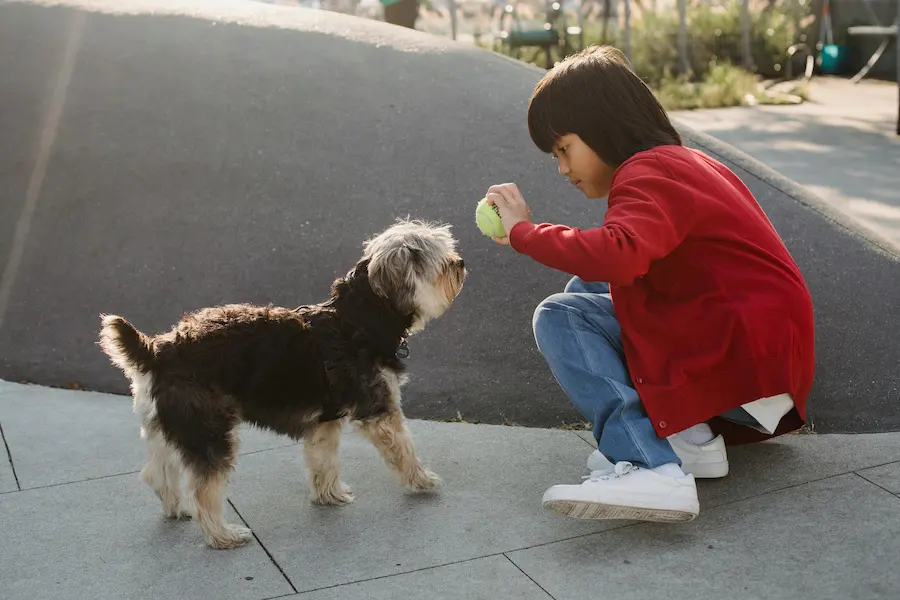
Contact with people of different ages, genders, and contexts helps the puppy feel comfortable in various environments. Puppies should interact with adults, children, people wearing glasses, hats, or uniforms, always under supervision and with positive reinforcement. These interactions teach that humans are sources of positive stimuli and security, reducing the likelihood of fear or aggression in the future.
Socialization with other dogs and animals
Early contact with well-balanced dogs is essential for learning canine communication and proper play signals. Sessions should be short, supervised, and with vaccinated dogs. Gradual exposure to other pets such as cats or household animals teaches the puppy to coexist without fear or aggression, strengthening temperament and social skills.
Exposure to sounds and environments
Puppies should become accustomed to everyday noises (vacuum, traffic, doorbells) and new situations (parks, streets, public transport) gradually. Progressive and positive exposure prevents phobias and stress. It is important to control intensity and duration to ensure each experience is safe and does not cause fear. Rewarding calmness and curiosity strengthens confidence and eases future adaptation.
Positive reinforcement and fear management
During socialization, positive reinforcement is the most powerful tool. Rewarding approach, exploration, and calm play with treats, petting, or praise reinforces that new experiences are safe and enjoyable. If the puppy shows fear, it is recommended to remove stressful stimuli gently and reintroduce them gradually, avoiding forcing the animal, which could increase anxiety and negatively impact socialization.
Routines and consistency
Socialization requires consistency. Establishing daily routines for interaction with people, animals, and the environment helps the puppy anticipate experiences and reduce stress. Short, frequent socialization sessions are more effective than long, sporadic exposures. Repetition and predictability allow the puppy to handle new stimuli calmly and confidently.
Benefits of proper socialization
A well-socialized puppy will grow up confident, secure, and balanced, able to interact with people and animals without fear or aggression. This facilitates household coexistence, vet visits, travel, and varied social situations. It also significantly reduces behavioral problems in adulthood, strengthening the relationship between owner and dog based on respect, trust, and cooperation. Early socialization is a long-term investment in well-being and harmony.